

Boys Residential Treatment
in Oxford, Mississippi
Dual-Diagnosis Substance Use and Mental Health Care
What Is Residential Treatment for Teen Boys?
Residential treatment for teenage boys is a live-in program where adolescents receive around-the-clock clinical care, therapy, schooling, and supervision in a structured setting away from home. At Stonewater, boys ages 12 to 18 live on campus in Oxford, Mississippi, for a typical stay of 60 to 90 days while treating substance use and co-occurring mental health conditions.
Residential care sits between outpatient therapy and a hospital stay. It is the right level of care when weekly sessions are no longer enough, when a young man's environment keeps pulling him back into the same patterns, or when his safety at home has become a daily question. For those who need it, sub-acute medically supervised detox for teens is available at Stonewater before residential treatment begins.


Why Choose Residential Treatment?
When your son has turned into someone you do not recognize, residential treatment may be the best option.
Adolescents beginning the journey toward recovery need a safe, supportive, non-institutional environment in which they can grow, transform, and thrive. At Stonewater Adolescent Recovery Center in Oxford, Mississippi, they receive that support 24 hours a day in a welcoming setting, free from the negative influences of their normal life.
Stonewater sits on a tranquil, waterfront property in the wooded hills of Northeast Mississippi, creating a peaceful, safe place to begin the path to recovery. The grounds include a custom-built residential lodge, a fitness facility, inviting counseling and therapy spaces, and a range of recreational activities.
Residential treatment interrupts dangerous habits, substance use, and mental health challenges in a way that outpatient treatment cannot. For many families, it is most effective to begin a son's recovery in residential treatment.

Where Can I Send My Son If He Is Out of Control?
If you are asking this question, you have likely tried many different approaches without long-lasting results: the talks, the consequences, the counselor, the new school. Many parents reach this point feeling that they have failed. A boy who is using substances to manage anxiety, depression, or trauma often needs more structure and clinical support than any household can provide.
A residential treatment center for adolescent boys gives your son that needed structure around the clock. It removes him from the peers and access that are feeding the problem, surrounds him with a licensed clinical team, and keeps his education moving. Just as importantly, it gives your family time to reset, and learn the tools you need alongside him.
The first step is a confidential conversation with our admissions team. They will listen to what has been happening, help you understand whether residential care is the right fit, and point you toward other options if it is not.
Who Does Stonewater Serve?
- Boys ages 12 to 18. Our residential program serves boys only.
- Boys facing substance use and mental health challenges together. Residents are working through substance use alongside conditions such as anxiety, depression, ADHD, bipolar disorder, or trauma. Cannabis, vaping, and nicotine are the most common substances among our residents. Learn more about our anxiety treatment for teen boys.
- Families from across the country. Families travel to Oxford, Mississippi, from many states, and our family program is designed for families who may live far from our campus.

What Is Dual-Diagnosis Treatment for Boys?
The Stonewater program for boys is a dual-diagnosis program, which means our clinical team diagnoses and treats substance use and mental health challenges separately and simultaneously. These challenges often go hand in hand. Far too often, adolescents turn to drugs or alcohol to self-medicate growing anxiety, to numb the pain of past trauma, or to try to overcome depression. At the same time, substance use can itself cause mental health problems, creating a cycle that is difficult to escape.
For families on the outside looking in, it can be hard to tell where one problem begins and another ends. Our psychological testing and the experience of our adolescent treatment experts can untangle substance use and mental health concerns, clearing the way for a targeted path of treatment.
We offer a range of dual-diagnosis treatment options, including:
- ADHD treatment
- Anxiety treatment
- Bipolar disorder treatment
- Depression treatment
- Substance use disorder treatment
- Suicidal ideation treatment
- Trauma treatment
- And more

What Therapies Are Used in Residential Treatment?
Treatment plans at Stonewater are built around what is actually driving each young man’s behavior rather than the behavior alone. Stonewater operates from a Dialectical Behavior Therapy (DBT) foundation, supported by cognitive behavioral therapy, trauma-informed care, and experiential therapies.
- Dialectical Behavior Therapy (DBT) ➔ Builds emotion regulation and distress tolerance
- Cognitive Behavioral Therapy (CBT) ➔ Reframes the thoughts that drive substance use
- EMDR ➔ Helps process trauma that substances may be numbing; learn more about trauma therapy for adolescent boys
- Biofeedback ➔ Teaches physical awareness of stress and anxiety
- Motivational Interviewing ➔ Strengthens a boy's own reasons for change
- Family Therapy ➔ Repairs communication and prepares the home for his return
How Does DBT Help Teen Boys?
The adolescent brain is still developing the systems that manage strong emotion, which is one reason teens can feel overwhelmed so quickly. DBT teaches residents to notice the first physical signs of an emotion, break an overwhelming feeling into concrete sensations, put it into words, and choose a skill instead of a reaction.
Every member of the Stonewater direct care team is trained in DBT, so boys practice these skills throughout the day, not only in therapy sessions. DBT has one of the strongest evidence bases in adolescent mental health care; and a 2018 randomized trial found it significantly reduced suicide attempts and self-harm in high-risk adolescents.
Learn more about our Dialectical Behavior Therapy program.

What Does a Day Look Like at Stonewater?

Days at Stonewater follow a consistent structure: individual and group therapy, school, physical activity, and experiential programming, with built-in free time for independent school or clinical work. Our on-site, nationally accredited school keeps residents on track academically and provides a real-world setting to practice new coping skills under everyday pressure.
Outside the classroom, residents have access to our campus gym and take part in activities like kayaking, fishing, basketball, and holiday traditions, as well as the Stonewater Startup Program, which encourages entrepreneurial thinking. Each activity is tied to his individual treatment plan, and peer support throughout the day helps our residents build independence and accountability.

How Are Families Involved in Treatment?
Lasting change depends on the whole family learning new patterns together. Stonewater hosts two on-campus Family Days each month; the first begins with therapeutic family processing and support and the second with a family intensive workshop.
The rest of each Family Day is spent connecting with other families, visiting your son, and working on restoring communication and trust that may have been lost. Family therapy continues between visits, and discharge planning includes a personalized home contract developed with your family. Learn more about our family therapy and support program.
What Are the Benefits of Residential Treatment for Boys?
Residential treatment can be a turning point for your son and your family. Benefits include:
- Removal from negative influences
- 24-hour supervision
- A community that supports individuality
- Time for reflection
- Emotional and spiritual growth
- Treatment for mental health conditions alongside behavioral therapies
- Continued education
- Counseling and relationship-building for families
Most importantly, residential treatment equips boys with the tools they need to maintain their recovery after they return home.

How Does Admission Work?
|
STEP |
WHAT HAPPENS |
WHAT YOUR FAMILY DOES |
|---|---|---|
|
1. Call Admissions |
A confidential conversation, by phone at (662) 373-2828, about what has led your family to seek help. |
Share what has been happening at home, at school, and what has led you to explore residential treatment. |
|
2. Clinical Fit |
Our team evaluates whether Stonewater is the right level of care for your son. |
Provide any prior evaluations, diagnoses, or treatment history. |
|
3. Verify Insurance |
Our team reviews your benefits with your insurer and gives you clear cost information. |
Submit the confidential insurance verification form. |
|
4. Virtual Admission |
You meet the clinical team, receive the Family Welcome Folder, and plan his arrival. |
Complete intake paperwork and travel arrangements. |
|
5. Assessment and Plan |
Psychological testing if needed and on-site assessments shape an individualized treatment plan with his primary therapist. |
Take part in the family assessment to help the team understand the dynamics of the family system. |
See the full Stonewater treatment process.
Is Residential Treatment Right for My Son?
It can be hard to tell normal teenage growing pains from a growing problem. Signs that it may be time to talk with a clinical team include:
- Substance use that continues despite consequences at home or school
- Sudden changes in friends, sleep, grades, or personality
- Outpatient therapy that has not led to lasting change
- Talk of self-harm or hopelessness
- Conflict at home that no longer feels safe or manageable
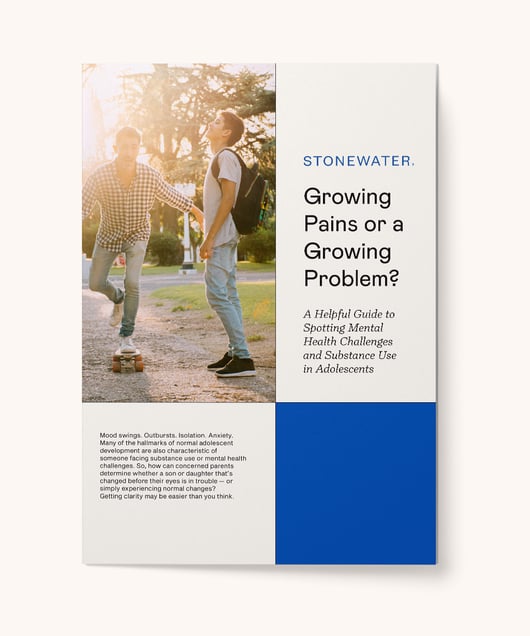
Growing Pains or a Growing Problem? Download our free guide to the signs of substance use and behavioral health struggles that you should not ignore.
Frequently Asked Questions About Boys Residential Treatment
How long does residential treatment for teen boys last?
Residential treatment at Stonewater typically lasts 60 to 90 days, and our clinical team recommends 90 days when possible. The exact length depends on your son's progress and clinical needs. Recovery planning begins well before discharge so the transition home or to an extended care program is supported.
What ages does Stonewater serve?
Stonewater's residential program serves boys ages 12 to 18 from across the country in an intentional gender-specific environment.
Does my son need to have a substance use problem to be admitted?
Yes. Stonewater is a dual-diagnosis program, so residents are working through some level of problematic substance use along with a mental health condition. Marijuana, vaping, alcohol and nicotine are among the most commonly used substances among our residents, but we are able to manage a broad spectrum of substance use. If your son is struggling with mental health concerns alone, our admissions team can help you find a program that removes any substance use considerations from their treatment approach.
Will my son fall behind in school during residential treatment?
No. Residents attend our on-site accredited school throughout their stay. Classes keep them on track academically, and the school day doubles as practice for the coping skills they are learning in therapy.
How are parents involved while their son is in treatment?
Parents are involved throughout treatment. Stonewater hosts two on-campus Family Days each month with education, family workshops, and time with your son, and family therapy continues virtually between visits. We also have a thriving alumni parent community which gives current Stonewater families the opportunity to learn and build relationships with parents who have been on this same path.
Does insurance cover residential treatment for teens?
Many commercial insurance plans cover part or all of residential treatment, and coverage depends on your specific policy. Stonewater works with plans including, but not limited to, Aetna, Blue Cross Blue Shield, Cigna, TRICARE, UMR, Multiplan and UnitedHealthcare. Submit a confidential insurance verification form and our team will review your benefits with you.
Is Stonewater accredited?
Yes. Stonewater is accredited by The Joint Commission, which awards its Gold Seal of Approval after an unannounced on-site review of safety, clinical care, and operations. Stonewater is also licensed by the Mississippi Department of Mental Health.

Get Your Child Back. Better.
Watching your son struggle is heartbreaking and exhausting, and reaching out is a sign of strength, not failure. With the right clinical support, a difficult season does not have to define his future. You do not have to navigate this journey alone.
-
Speak with an Admissions Specialist: Call our compassionate clinical team at (662) 373-2828.
-
Explore Our Programs: See how the Stonewater treatment process works.
-
Verify Insurance: Confidential, no-obligation benefits check.